Afrika mit SafariScout.com

Willkommen auf der Website von SafariScout.com!

Sie erreichen uns unter info@safariscout.com

oder der Telefonnummer ++49 331 704 67 36


Replicant2
prev next
 

Urlaub in Afrika

   
Home Safari Spezial Rangerkurs 28 Tage Field Guide/Rangerkurs in Südafrika € 2180
28 Tage Field Guide/Rangerkurs in Südafrika € 2180

Das Programm, das in Trainingscamps nahe dem südafrikanischen Krüger Nationalpark stattfindet, richtet sich an Menschen, die als professioneller Field Guide in die Tourismus-Industrie einsteigen möchten. Aber auch Naturenthusiasten mit Abenteuergeist, die während ihres Afrika-Aufenthaltes fundiertes Wissen über Flora und Fauna erlangen möchten, sind genau richtig. Transfers ab Johannesburg möglich. Alle Kurse werden von Busch Camps in der Wildniss aus durchgeführt. Die Kursteilnehmer essen, schlafen und atmen den afrikanischen Bush im wahrsten Sinne des Wortes!

Hier ein Überblick über die Kursinhalte, Daten 2010/2011 und Preise. Derzeit erarbeiten wir die ausführliche deutsche Übersetzung. Daher finden Sie solange die ausführlichen Informationen zu den Kursen weiter unten in Englisch.

28 Tage Field Guide Trainingsprogramm Level 1 (FGASA akkreditiert)

Die Zusammenstellung der Kursinhalte erfolgte mit dem Ziel, der Safari-Industrie, gut ausgebildete (mit FGASA und THETA Akkreditierung) und professionelle Field-Guides zur Verfügung zu stellen.

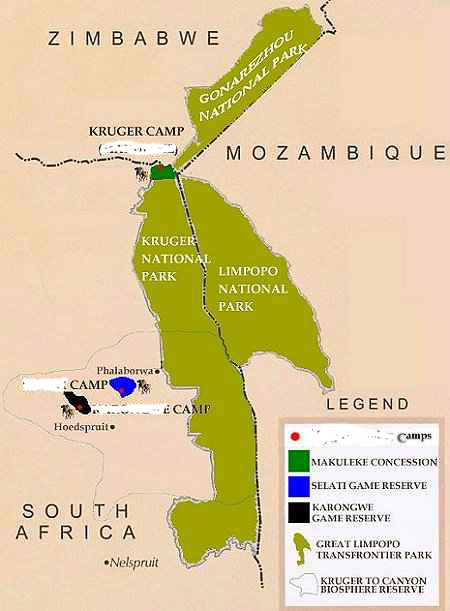
Ort: Selati und Karongwe Camps nahe Krüger Nationalpark

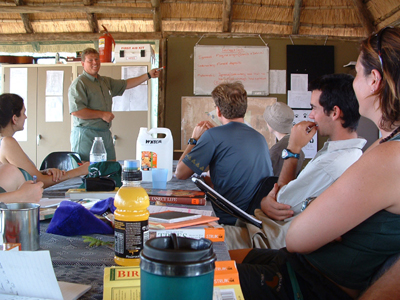
Tagesablauf: Der Kurs bietet für den Studenten maximale praktische Erfahrungen im Buschland. Jeden Tag werden mehrere Stunden, in dem Sie über die Ökologie lernen aber auch einfach die wilde Natur genießen können, draußen verbracht, entweder zu Fuß oder im Geländewagen. Die Unterrichtstunden oder Vorlesungen zu den Themen des Tages (sehen Sie nachfolgende Liste) erfolgen am späten Vormittag, wonach Sie auch noch Zeit haben zum lernen und nachschlagen.

Folgende Themen werden während dem 28-tägigen Level 1 Kurs behandelt:
Begrüßung und Einleitung – Prinzipien der Reiseleitung in natürlicher Umgebung – Angebot einer geführten Naturerfahrung – Geologie – Astronomie – Wetter und Klima – Grundlagen der Ökologie – Grundlagen der Klassifizierungslehre (Taxonomie) – Ökosysteme in Südafrika – Botanik und Gräser – Gliederfüßer (Insekten und Ähnliche) – Amphibien – Reptilien – Fische – Vögel – Säugetiere – Tierverhalten – Naturschutz und Geschichte der menschlichen Besiedlung

Weitere Aktivitäten:
Grundlagen des Geländewagenfahrens
Übernachtung unter freien Himmel im Buschland
Grundlagen der Gewehrhandhabung und Schiessübung
Tests, Präsentationen und Prüfungen

Tests und Evaluierungen: Folgende Tests und Prüfungen werden während dem Kurs abgelegt.
3 x schriftliche Tests
2 x mündliche Präsentation
2 x praktische Prüfungen: zu Fuß geführte Wanderung & Ausflug im Geländewagen (Game drive)

WICHTIG:
Die Field Guides Association of Southern Africa (FGASA) (Verband der Südafrikanischen Field-Guides) repräsentiert die individuellen Guides, Spurenleser und Ausbilder. Sie ist verantwortlich für das Regelwerk in der südafrikanischen Ausbildungsbranche. Die ausbildende Firma wird von der FGASA anerkannt und empfohlen. Das bedeutet, dass deren Trainingsstandards den national gültigen und anerkannten Regeln entsprechen. Falls Sie keine professionelle Laufbahn als Fied-Guide anstreben, reicht es, die oben erwähnten Tests zu bestehen um die Level 1 and 2 Kurse erfolgreich abzuschließen. Wenn Sie aber tatsächlich eine Laufbahn als Field-Guide starten möchten, können Sie während des Kurses zusätzlich zu den oben erwähnten Tests auch noch die schriftliche FGASA-Level-1-Prüfung und den praktischen FGASA-Test ablegen.

ZUR BEACHTUNG: FGASA und die ausbildende Firma sind zwei verschiedene, voneinander unabhängige Institutionen. Sie müssen sich daher, falls Sie wie oben angegeben, die FGASA-Prüfungen machen möchten, VOR Kursteilnahme direkt bei der FGASA registrieren. Beachten Sie bitte, dass wenn Sie die Fgasa-Level-1-Prüfungen mitmachen, eine zusätzliche Gebühr in Höhe von ZAR 150,00 anfällt. Diesen Betrag bringen Sie bitte bar mit zum Camp. Bei Ihrer Anmeldung für den Kurs, bitten wir um Mitteilung, ob Sie auch die FGASA-Level 1-Qualifizierung mitmachen möchten.

The courses are designed by experienced professional guides to provide participants with an exciting never-to-be-forgotten learning adventure. The instructors have years of experience guiding tourists around Africa, and now they are giving something back to the wilderness that they love by sharing their knowledge, experience and wisdom with students who attend our courses. Students who have attended these courses have returned to the “real world” with a different outlook on life. Some have taken this new outlook into their day-to-day lives and others, inspired by their time in the bush, have completely changed their lives and careers.

The company:
The company was one of the first to conduct guide training courses and has been around for more than a decade now. This fact gives students the assurance of stability. Established in 1993 with a mission to raise the standard of guiding in Africa, the company is the oldest field guide training company in Africa. They were one of the first companies to conduct formal training programmes for nature guides. For more than a decade, they have been sending young people into the African wilderness to learn about the environment in exciting, in-depth and sensitive ways and to find out what it really takes to become a game ranger.

The company is owned by two highly-experienced guides with a passion for wilderness who are responsible for the design of the course programmes. One being one of southern Africa's top professional nature guides and also a successful wildlife photographer and author with five books and numerous other publications to his credit. The other has worked as a guide in some of southern Africa's top game lodges and travelled widely throughout southern Africa, visiting most of the remote wilderness areas in the region. The company is dedicated to training and stays focused on making sure that the training programmes are of the highest standards.

The courses:
The courses are conducted by a team of experienced, dedicated and qualified instructors who have a passion for guiding and the wilderness. In addition, a cook and an assistant keep the students fed and the camp clean, so allowing students to focus on the learning experience. The courses are condutcted in great wilderness areas including one of the greatest national parks in the world, the Kruger National Park.

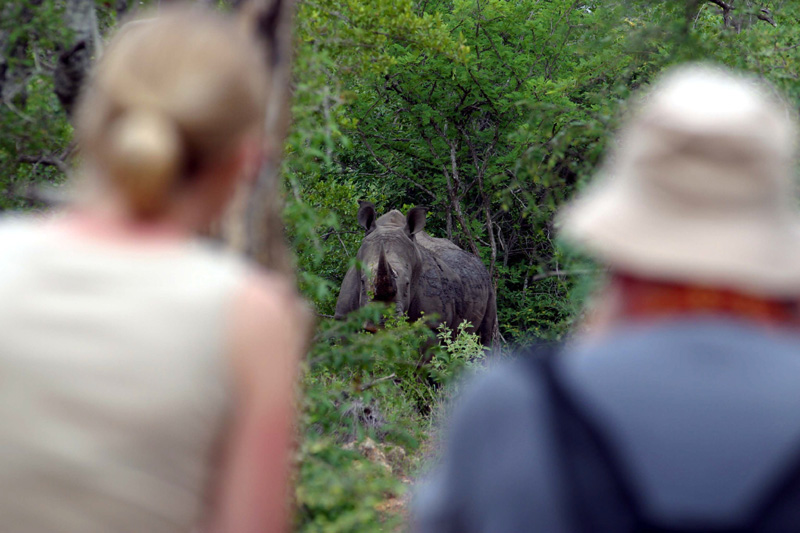
The students spend their entire course living in the middle of the African wilderness, with wild animals potentially right outside their tents. They do not conduct courses in air-conditioned lecture rooms in urban areas and then take you on “field trips”. The entire course is a “field trip”. The camps are unfenced and mostly canvas, so you are in touch with the wilderness all the time. Every training course is a learning adventure carried out in exciting wilderness areas with an emphasis on daily contact with the natural environment and its wildlife. Approximately 60% of the activities are conducted on foot, allowing you to get the adrenalin rush of approaching big game animals on foot as well as to study and observe the smaller components of the ecosystem. The remaining time is spent in open game-drive vehicles. Other activities include shooting, sleep-outs in the bush and night drives.

The camps:
Kruger National Park Camp: Kruger National Park Camp is in the 23 000ha Makuleke concession in the northernmost part of the Kruger Park between the Limpopo and Luvuvhu Rivers. This is a true wilderness, steeped in history and situated in the remotest part of Kruger in one of the most biologically diverse areas. Scenery ranges from the beautiful, quietly-flowing Luvuvhu River shaded by Nyala trees and fever tree forests and teeming with hippos and crocodiles; to the awesome Lanner Gorge, palm-fringed wetlands and rocky outcrops with thousand-year-old baobab trees. All the wildlife that one would expect to see in a great national park such as Kruger is present: plains game such as zebra, kudu and impala, prides of lions, a high density of leopards, herds of elephant, both rhinoceros species and African buffalo, nyala antelope in abundance and also seldom-seen animals such as eland, suni and bushpig. There is abundant birdlife. This part of Kruger is known to be one of the best birding places in the park and is home to rarely-seen species such as Pel's fishing owl, wattle-eyed flycatcher and greyheaded parrot.

Students are accommodated in comfortable, thatched, tented rooms placed on wooden decks in the shade of large nyala trees. Each room has an en-suite bathroom consisting of a shower, wash basin and flush toilet and also has a verandah overlooking the surrounding bush.

Selati Camp: Selati Camp is a simple camp situated on the bank of the Selati River in the 33 000 ha privately-owned Selati Game Reserve to the west of Phalaborwa in Limpopo Province. The reserve has a variety of habitats including thornveld, open plains, riverine woodland and magnificent granite hills. A wide range of animals lives here, including lions, elephants, rhinoceros and leopard as well as plains game such as eland, sable antelope, giraffe, zebra, wildebeest, waterbuck, kudu, impala and baboons and monkeys. The camp consists of simple dome tents, shared bathroom facilities and a communal area overlooking the Selati River. Students bring their own bedding and sleep on mattresses on the floor of the tents.

Karongwe Camp: Karongwe Camp is situated on the bank of the Karongwe River in the 9000 ha Edeni Game Reserve, south-west of Phalaborwa in Limpopo Province. The reserve has beautiful riverine systems, rocky outcrops and savannah bushveld habitats and is home to a variety of game including lion, leopard, white rhinoceros, cheetah, elephant and plains game typical of African wildlife habitats. Students are accommodated in walk-in Meru tents with shared bathroom facilities. Students sleep on beds and bedding is supplied. A feature of the camp is the thatched sleep-out deck.

A typical day:
A typical daily programme at the camp follows a routine of rising early, usually before sunrise, drinking hot coffee and having biscuits and then leaving the camp for an outing into the wilderness. The outings are extremely flexible and determined by the unpredictability of what is found during the outing in combination with the subjects that have to be covered.

The outing could be a game drive following up on the roar of a lion heard during the night or a walk learning about the plant species occurring in the area. It could be a walk following fresh elephant tracks, learning how to track the animal and finding it or it could be a game drive to a waterhole where animals come to drink. Students return to camp in the late morning for a hearty brunch which is followed by a lecture on the subject of the day. Study and rest time is then followed by afternoon tea and another outing into the wilderness until sunset, if walking, or until well after dark if doing a game drive. Afternoon outings could include night drives looking for nocturnal animals such as owls, bushbabies and leopards or it could be a walk looking for and learning how to identify interesting birds. It could be time spent studying the night skies or it could be a time for students to test their 4×4 driving skills.

It is then back to camp for dinner, stories around the campfire and then bed. The emphasis is on practical day-to-day experiences in the bush. The daily outings are flexible and may focus on specific subjects such as animal tracks and tracking, birds, plant identification or animal behaviour, or may involve game viewing and learning about the ecosystem in general.The advantage of the courses is that they are conducted in the middle of magnificent wilderness areas where students are given the opportunity to find out what it is really like to live in the African wilderness in the midst of wild animals and far-removed from the trappings of modern society.

The instructors:
The course instructors have been around for a long time. Apart from other factors, they are selected based on the number of years of experience that they have had in the guiding industry. The company has been involved in community training with the Africa Foundation and the Makuleke Community, ensuring that local people living on the borders of the national parks gain access to training which will ultimately provide them with job opportunities. The company has conducted training programmes for top tourism operators such as Wilderness Safaris, Tanzania Wildlife Safaris, KZN Wildlife, Heritage Group and various privately-owned game lodges in southern Africa.

Group Size:
The number of students is limited on each course to a total maximum of 20, with a maximum of 10 students for each instructor. This ensures that the students get personal attention at all times.

Kurs Fakten
 
Preis 2011: ZAR 21 750 (ca. € 2275) Selati camp
Preis 2011: ZAR 25 999 (ca. € 2720) Karongwe camp  

Extrakosten: Eintritt Kruger National Park
Start in den Camps nahe Hoedspruit/Südafrika
Ende in den Camps nahe Hoedspruit/Südafrika
Mahlzeiten inbegriffen
Kurs in Englisch

Kursdaten 2010:

20. Oktober - 16. November - Karongwe Camp
27. Oktober - 23. November - Selati Camp
24. November - 21. Dezember - Karongwe Camp

Kursdaten 2011:

Selati Camp:
8 Januar – 4 Februar
10 Februar – 9 März
26 April – 23 Mai
7 Juni – 4 Juli
6 August – 2 September
20 Oktober– 16 November

Karongwe Camp:
14 Januar – 10 Februar
30 März – 26 April
25 Juni – 22 Juli
26 August –22 September
10 November – 7 Dezember

Busch-Bus-Preise:
O.R.Tambo International Airport (JNB) bis Karongwe: ZAR 855 pro Person  einfache Fahrt
O.R.Tambo International Airport (JNB) bis Selati: ZAR 955 pro Person  einfache Fahrt
O.R.Tambo International Airport (JNB) bis Makuleke: ZAR 1 955 pro Person  einfache Fahrt
O.R.Tambo International Airport (JNB) bis Karongwe: ZAR 1 710 pro Person  Hin- und Rückfahrt
O.R.Tambo International Airport (JNB) bis Selati: ZAR 1 910 pro Person  Hin- und Rückfahrt
O.R.Tambo International Airport (JNB) bis Makuleke: ZAR 3 910 pro Person  Hin- und Rückfahrt
Karongwe bis Selati: ZAR 880 pro Person  einfache Fahrt
Karongwe bis Makuleke: ZAR 1 250 pro Person  einfache Fahrt
Selati bis Makuleke: ZAR 1 350 pro Person  einfache Fahrt

Im Preis inbegriffen:
Unterkunft, Mahlzeiten, Unterricht, Pirschfahrten- und wanderungen
 
Nicht inbegriffen:
Transport von und zu den Camps (Transfer von Johannesburg kann organisiert werden); Unterkunft vor und nach dem Kurs; Getränke; Wäscheservice


Alle Afrika Safaris sortiert von 2 bis 56 Tagen

Hier finden Sie unsere Afrika Safaris sortiert nach Dauer, Abfahrtsort und Art der Unterkunft.

Urlaubsplanung leicht gemacht!